
Read Write Inc.

The Government strongly recommend the use of synthetic phonics when teaching early literacy skills to children. Synthetic phonics is simply the ability to convert a letter or letter group into sounds that are then blended together into a word. At Birchington CEP we use Read, Write, Inc. (RWI) - an inclusive synthetic phonic programme, to teach our children to read, to write and to spell.
We have adopted this as our whole school approach as the programme teaches the basic sounds and letter formation before advancing to more complex sounds and reading for comprehension. The programme moves from learning to read to reading to learn.
In the EYFS and KS1, RWI sessions occur each day as the continuity and pace of the programme is key to accelerating the progress of children’s reading development. This method of phonics teaching is both systematic and repetitive in order to embed learning; the programme also offers plenty of opportunities for fun-based, interactive learning using drama, role play and props to engage with and to enjoy texts and stories. The children work in groups according to their confidence and competence. These groups are monitored on a regular basis in order to match the pace and the progress of each child; this also allows class teachers to identify where 1:1 interventions may be required in order to meet the expectations of the Phonics Check.
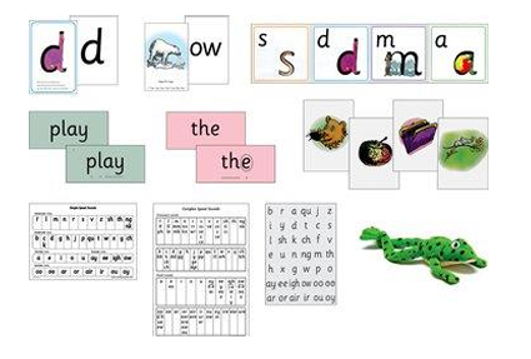
How RWI is taught at BCEP?
In the Early Years Foundation Stage, all children will learn how to ‘read’ the sounds in words and how those sounds can be written down.
The children:
- Learn 44 sounds and the corresponding letters/letter groups using simple picture prompts
- Learn to read words using Fred talk and sound blending
- Read from a range of storybooks and non-fictions books matched to their phonic knowledge
- Work well with partners
- Develop comprehension skills in stories by answering 'Find It' and 'Prove It' discussion questions

The children:
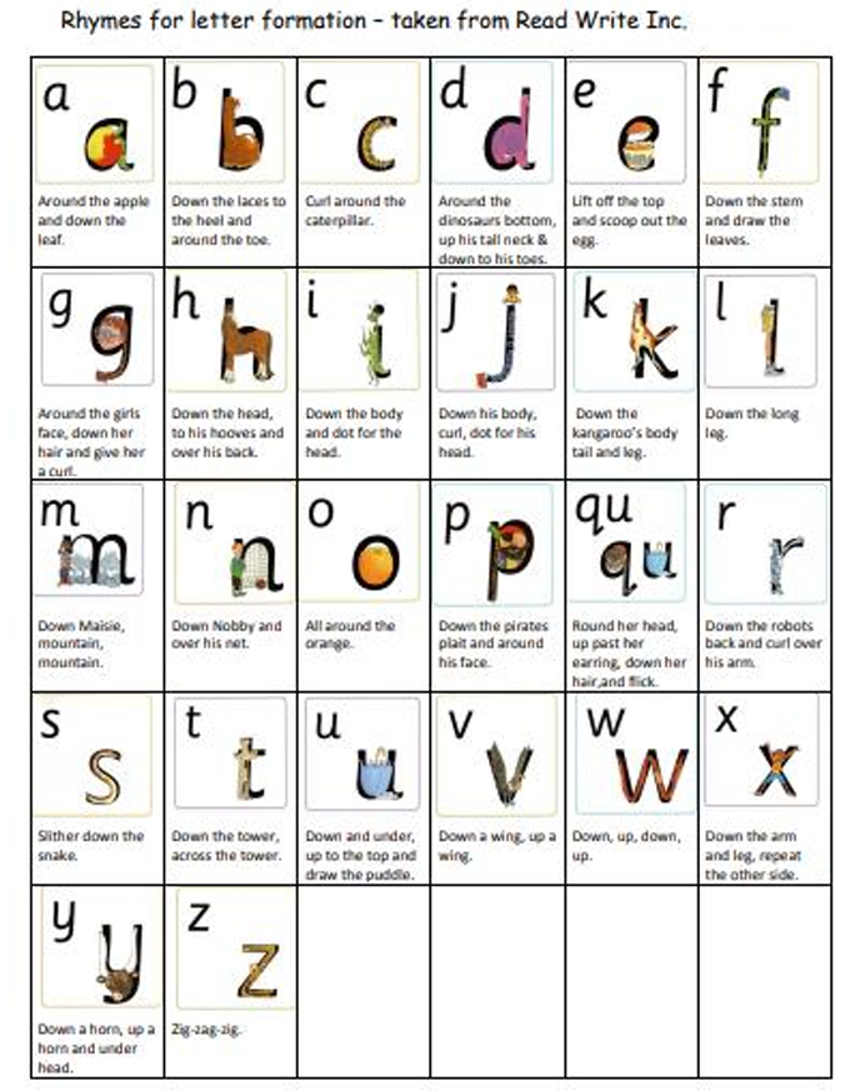
- Learn to write and form the letters/letter groups which represent the 44 sounds with the help of fun phrases
- Learn to write words by using Fred Talk
- Learn to build sentences by practising sentences out loud before they write
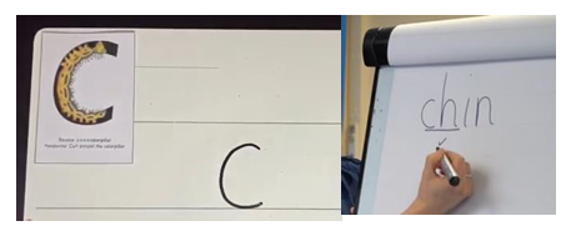
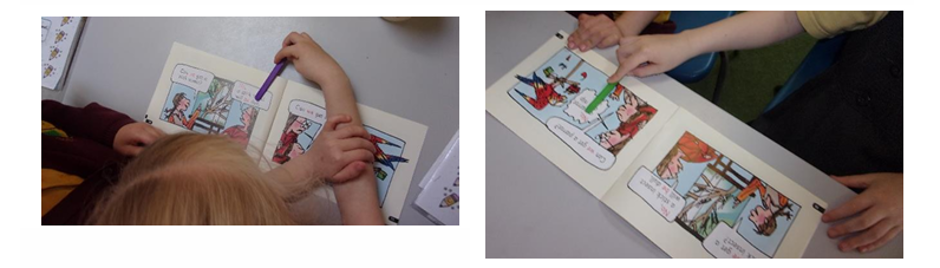
The children work in pairs so that they:
- Answer every question
- Practise every activity with their partner
- Take turns in talking and reading to each other
- Develop ambitious vocabulary
At school we use a puppet called Fred who is an expert on sounding out words! We call it, ‘Fred Talk’. E.g. m-o-p, c-a-t, m-a-n, sh-o-p, b-l-a-ck. We use pure sounds (‘m’ not’ muh’,’s’ not ‘suh’, etc.) so that your child will be able to blend the sounds into words more easily.
In Key Stage 1 (Years 1 and 2), the children continue to be taught phonics in groups, depending on their stage. They have a daily RWI lesson which starts with a 10/15 minute speed sounds lesson which teaches oral blending, new speed sounds and revision of previous speed sounds, oral blending, decoding words, reading common exception words, decoding ‘alien’ (pseudo) words, and spelling. In Year 1, children then read and comprehend a book which is carefully matched to their phonics knowledge following a 4 day plan.
Children are assessed regularly and those who are at risk of falling behind the programme’s pace and expectations are identified early and additional support is put in place to ensure that these children keep up and don’t have to catch up. The effectiveness of these sessions and the impact on progress is regularly evaluated by the English Hub. Children in Year 1 complete the phonics screening check at the end of the year. It is our aim that children in Year 2 complete the RWI programme by the Spring term of
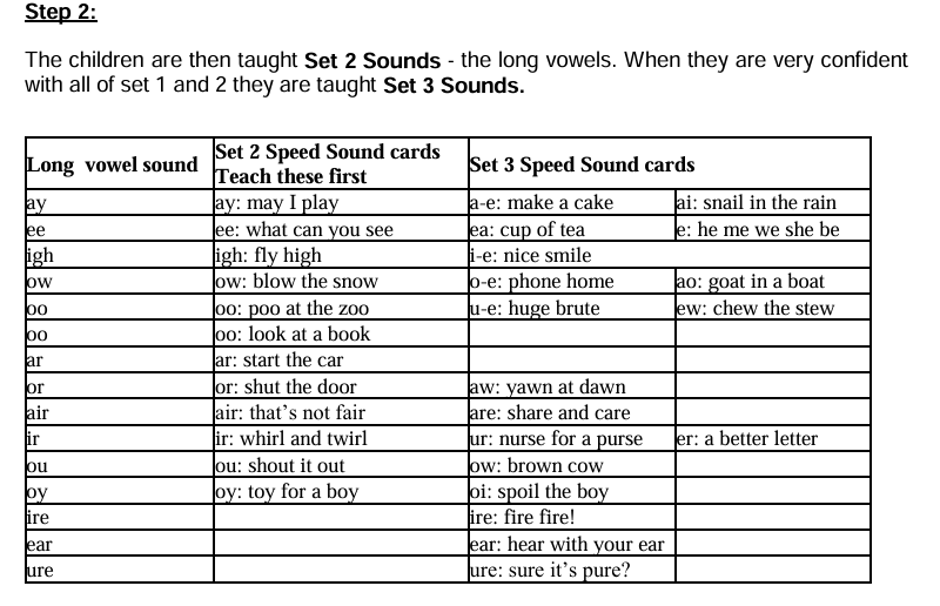
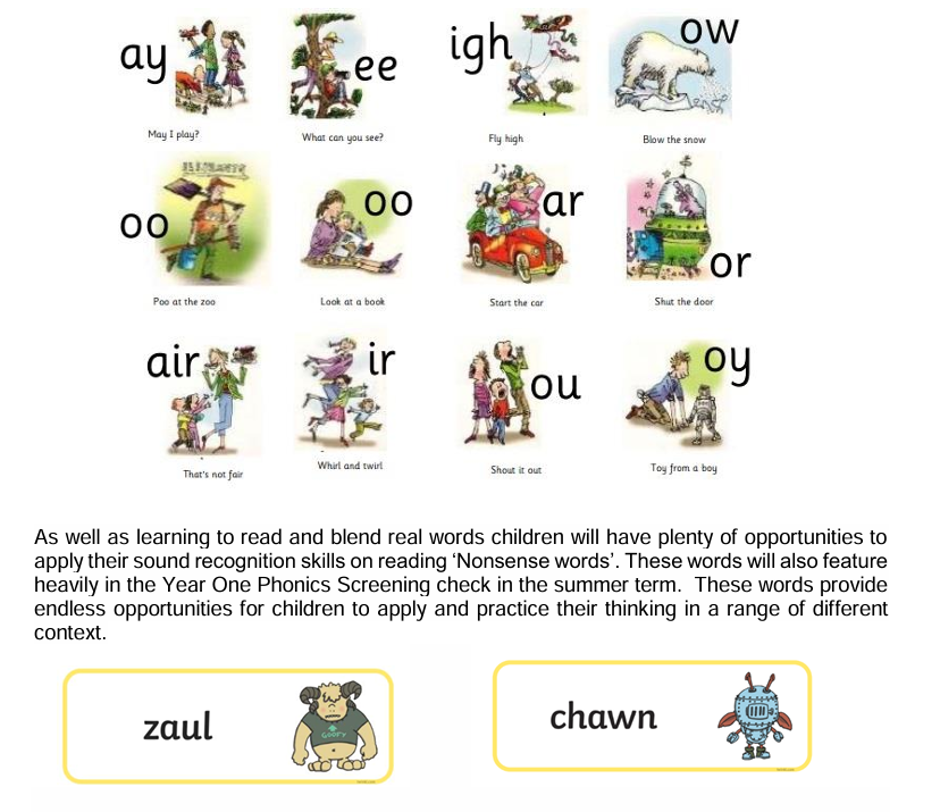
In Year 2, the children are taught the sounds in 3 sets. (Speed sounds) Set 1 Sounds are taught in the following order together with rhymes to help children form the letters correctly and instantly recognise sounds ready for blending.
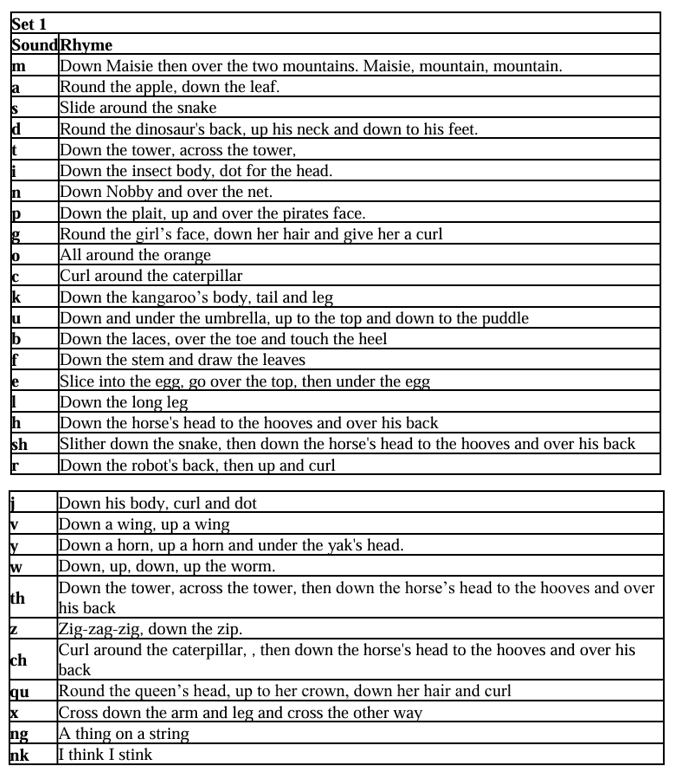
At this stage we do not use the letter names. Children will also use pictures for each sound to help recognise the sound and then form the shape of the sound.
Reading Books
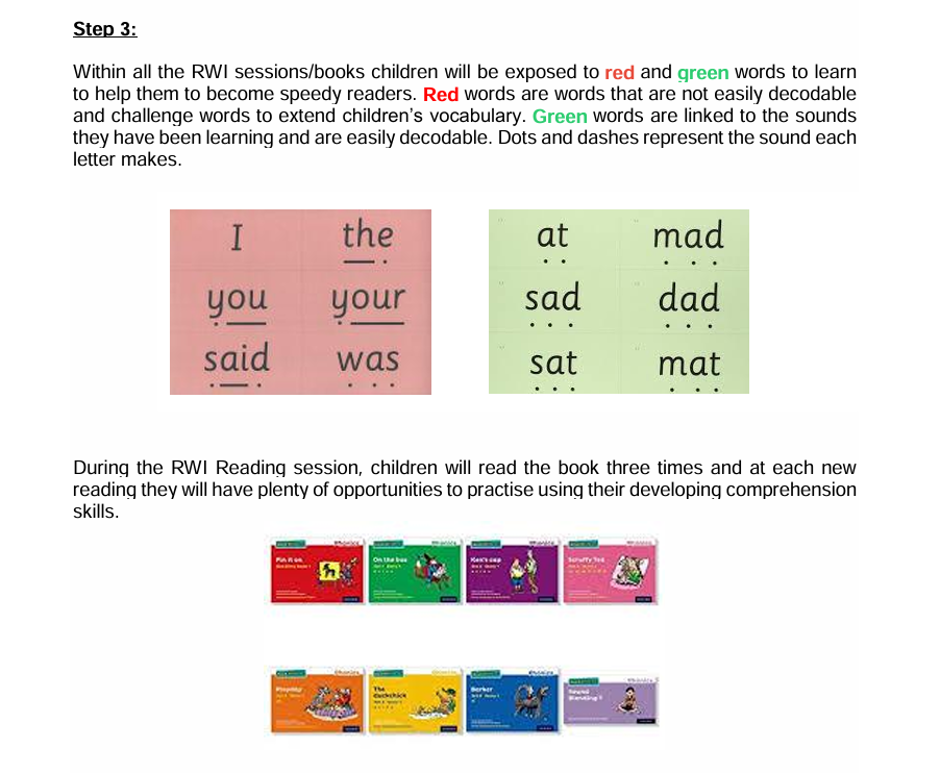
Children in Reception who are learning the first 44 letter sounds and are not blending fluently will bring home sound sheets, picture books and a library book for you to read with them. Once children can blend fluently and know the first 44 sounds they will bring home RWI Sound Blending Book, Ditty sheets or a RWI Book Bag Book based on their colour level. With the RWI Book Bag Books please encourage your child to read though the speed sounds page first, then the green and red words page and then check your child understands the meaning of words on the vocabulary check page, before they start reading the book. Children continue to work through the colour stages of RWI through EYFS, Year 1 and Year 2 with the aim to be off of the scheme by the beginning of the Spring term in Year 2.
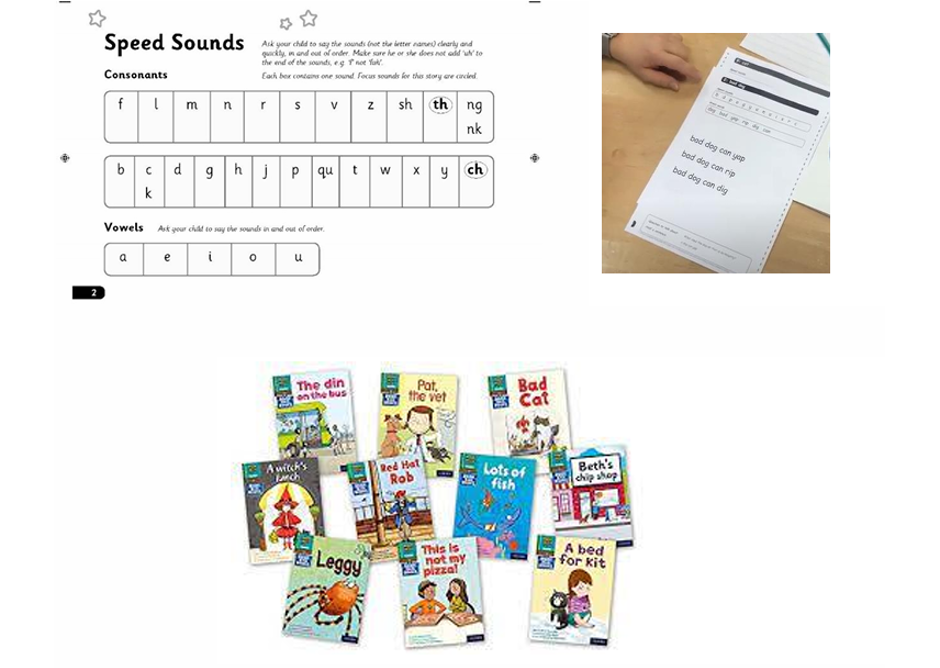
An Oxford Reading Tree Book, Project X Phonics Book, Big Cat Phonics Book or a Floppy’s Phonics Book may also be sent home to broaden your child’s reading coverage. We encourage all the books to be read 3 times to improve fluency, comprehension and understanding. Once the children have completed the RWI scheme they will move onto the Oxford Reading Scheme books.